Lightweight Dragonfly deployment on Kubernetes
· 11 min read
Author:
- Wenbo Qi(Gaius), Dragonfly Maintainer
Author:
Author:
Reviewer:
Author: Pavan Madduri, Senior Cloud Platform Engineer & CNCF Golden Kubestronaut
Dragonfly now natively speaks hf:// and modelscope:// — turning the world's two largest model hubs into P2P-accelerated sources for enterprise AI infrastructure.
Dragonfly graduates after demonstrating production readiness, powering container and AI workloads at scale.
Key Highlights:
SAN FRANCISCO, Calif. – January 14, 2026 – The Cloud Native Computing Foundation® (CNCF®), which builds sustainable ecosystems for cloud native software, today announced the graduation of Dragonfly, a cloud native open source image and file distribution system designed to solve cloud native image distribution in Kubernetes-centered applications.
“Dragonfly’s graduation reflects the project’s maturity, broad industry adoption and critical role in scaling cloud native infrastructure,” said Chris Aniszczyk, CTO, CNCF. “It’s especially exciting to see the project’s impact in accelerating image distribution and meeting the data demands of AI workloads. We’re proud to support a community that continues to push forward scalable, efficient and open solutions.”
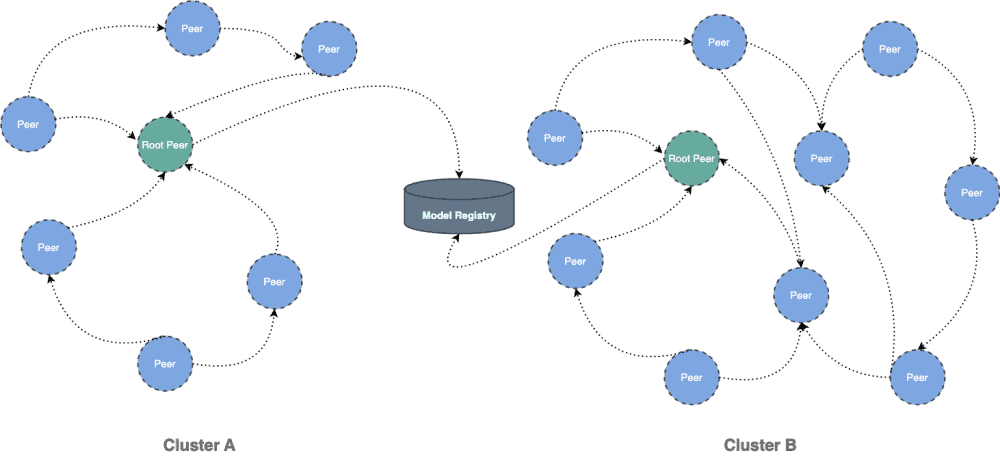
Dragonfly delivers efficient, stable, and secure data distribution and acceleration powered by peer-to-peer (P2P) technology. It aims to provide a best‑practice, standards‑based solution for cloud native architectures to improve large‑scale delivery of files, container images, OCI artifacts, AI models, caches, logs, and dependencies.
Dragonfly runs on Kubernetes and is installed via Helm, with its official chart available on Artifact Hub. It also includes tools like Prometheus for tracking performance, OpenTelemetry for collecting and sharing data, and gRPC for rapid communication between parts. Enhancing Harbor capability to distribute images and OCI artifacts through the preheat feature. In the GenAI era, as model serving becomes increasingly important, Dragonfly delivers even more value by distributing AI model artifacts defined by the ModelPack specification.
Dragonfly continues to advance container image distribution, supporting tens of millions of container launches per day in production, saving storage bandwidth by up to 90%, and reducing launch time from minutes to seconds, with large-scale adoption across different cloud native scenarios.
Dragonfly is also driving standards and acceleration solutions for distributing both AI model weights and optimized image layout in AI workloads. The technology reduces data loading for large-scale AI applications and enables the distribution of model weights at a hundred-terabyte scale to hundreds of nodes in minutes. As AI continues to integrate into operations, Dragonfly becomes crucial to powering large-scale AI workloads.
Dragonfly was open-sourced by Alibaba Group in November 2017. It then joined the CNCF as a Sandbox project in October 2018. During this stage, Dragonfly 1.0 became production-ready in November 2019 and the Dragonfly subproject, Nydus, was open-sourced in January 2020. Dragonfly then reached Incubation phase in April 2020, with Dragonfly 2.0 later released in 2021.
Since then, the community has significantly matured and attracted hundreds of contributors from organizations such as Ant Group, Alibaba Cloud, ByteDance, Kuaishou, Intel, Datadog, Zhipu AI, and more, who use Dragonfly to deliver efficient image and AI model distribution.
Since joining CNCF, contributors have increased by 500%, from 45 individuals across 5 companies to 271 individuals across over 130 companies. Commit activity has grown by over 3,000%, from roughly 800 to 26,000 commits, and the number of overall participants has reached 1,890.
Dragonfly will accelerate AI model weight distribution based on RDMA, improving throughput and reducing end-to-end latency. It will also optimize image layout to reduce data loading time for large-scale AI workloads. A load-aware two-phase scheduling will be introduced, leveraging collaboration between the scheduler and clients to enhance overall distribution efficiency. To provide more stable and reliable services, Dragonfly will support automatic updates and fault recovery, ensuring stable operation of all components during traffic bursts while controlling back-to-source traffic.
To officially graduate from Incubation status, the Dragonfly team enhanced the election policy, clarified the maintainer lifecycle, standardized the contribution process, defined the community ladder, and added community guidelines for subprojects. The graduation process is supported by CNCF’s Technical Oversight Committee (TOC) sponsors for Dragonfly, Karena Angell and Kevin Wang, who conducted a thorough technical due diligence with Dragonfly’s project maintainers.
Additionally, a third-party security audit of Dragonfly was conducted. The Dragonfly team along with the guidance of their TOC sponsors, completed both a self-assessment and a joint assessment with CNCF TAG Security, then collaborated with the Dragonfly security team on a threat model. After this, the team improved the project’s security policy.
Learn more about Dragonfly and join the community: https://d7y.io/
“I am thrilled, as the founder of Dragonfly, to announce its graduation from the CNCF. We are grateful to each and every open source contributor in the community, whose tenacity and commitment have enabled Dragonfly to reach its current state. Dragonfly was created to resolve Alibaba Group’s challenges with ultra-large-scale file distribution and was open-sourced in 2017. Looking back on this journey over the past eight years, every step has embodied the open source spirit and the tireless efforts of the many contributors. This graduation marks a new starting point for Dragonfly. I hope that the project will embark on a new journey, continue to explore more possibilities in the field of data distribution, and provide greater value!”
—Zuozheng Hu, founder of Dragonfly, emeritus maintainer
“I am delighted that Dragonfly is now a CNCF graduated project. This is a significant milestone, reflecting the maturity of the community, the trust of end users, and the reliability of the service. In the future, with the support of CNCF, the Dragonfly team will work together to drive the community’s sustainable growth and attract more contributors. Facing the challenges of large-scale model distribution and data distribution in the GenAI era, our team will continue to explore the future of data distribution within the cloud native ecosystem.”
—Wenbo Qi (Gaius), core Dragonfly maintainer
“Since open-sourcing in 2020, Nydus, alongside Dragonfly, has been validated at production scale. Dragonfly’s graduation is a key milestone for Nydus as a subproject, allowing the project to continue improving the image filesystem’s usability and performance. It will also allow us to further explore ecosystem standardization and AGI use cases that will advance the underlying infrastructure.”
—Song Yan, core Nydus maintainer
“The combination of Dragonfly and Nydus substantially shortens launch times for container images and AI models, enhancing system resilience and efficiency.”
—Jiang Liu, Nydus maintainer
“Thanks to the community’s collective efforts, Dragonfly has evolved from a tool for accelerating container images into a secure and stable distribution system widely adopted by many enterprises. Continuous improvements in usability and stability enable the project to support a variety of scenarios, including CI/CD, edge computing, and AI. New challenges are emerging for the distribution of model weights and data in the age of AI. Dragonfly is becoming a key infrastructure in mitigating these challenges. With the support of the CNCF, Dragonfly will continue to drive the future evolution of cloud native distribution technologies.”
—Yuan Yang, Dragonfly maintainer
We’re excited to announce that a paper on model distribution, co-authored by researchers from Dalian University of Technology and Ant Group, has been accepted for publication in the IEEE Transactions on Networking (TON), a high-impact journal recognized by IEEE for its significant influence in networking and systems research. 🎉🎉🎉
Empowering Dragonfly: A Lightweight and Scalable Distribution System for Large Models with High Concurrency
Zhou Xu, Dalian University of Technology Lizhen Zhou, Dalian University of Technology Zichuan Xu, Dalian University of Technology Wenbo Qi, Ant Group Jinjing Ma, Ant Group Song Yan, Ant Group Yuan Yang, Alibaba Cloud Min Huang, Dalian University of Technology Haomiao Jiang, Dalian University of Technology Qiufen Xia, Dalian University of Technology Guowei Wu, Dalian University of Technology
Dragonfly v2.3.0 is released! 🎉🎉🎉 Thanks the contributors who made this release happen and welcome you to visit d7y.io website.

CNCF projects highlighted in this post, and migrated by mingcheng.
Dragonfly v2.2.0 is released! 🎉🎉🎉 Thanks the contributors who made this release happen and welcome you to visit d7y.io website.
CNCF projects highlighted in this post, and migrated by mingcheng.
Project post by Yufei Chen, Miao Hao, and Min Huang, Dragonfly project
This document will help you experience how to use dragonfly with TritonServe. During the downloading of models, the file size is large and there are many services downloading the files at the same time. The bandwidth of the storage will reach the limit and the download will be slow.
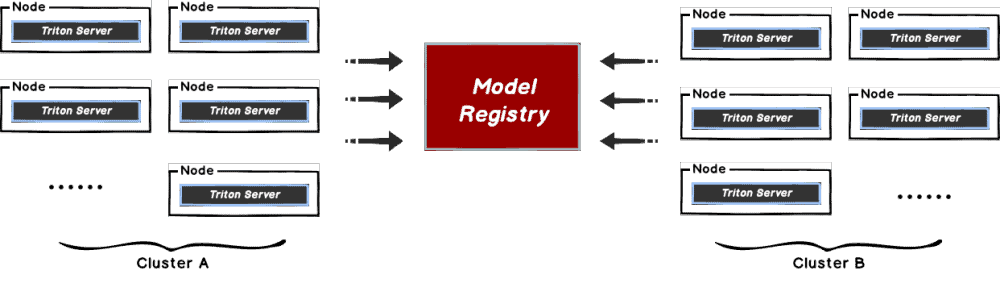
Dragonfly can be used to eliminate the bandwidth limit of the storage through P2P technology, thereby accelerating file downloading.